
Character identity and original motion must work together.
A Hotel Lobby character swap has two separate responsibilities. First, it must establish who appears in the scene. Second, it must preserve what the original performers do. A result that keeps the faces but replaces the choreography is not faithful to the trend. A result that follows every gesture but changes one person after a turn is equally unsuccessful.
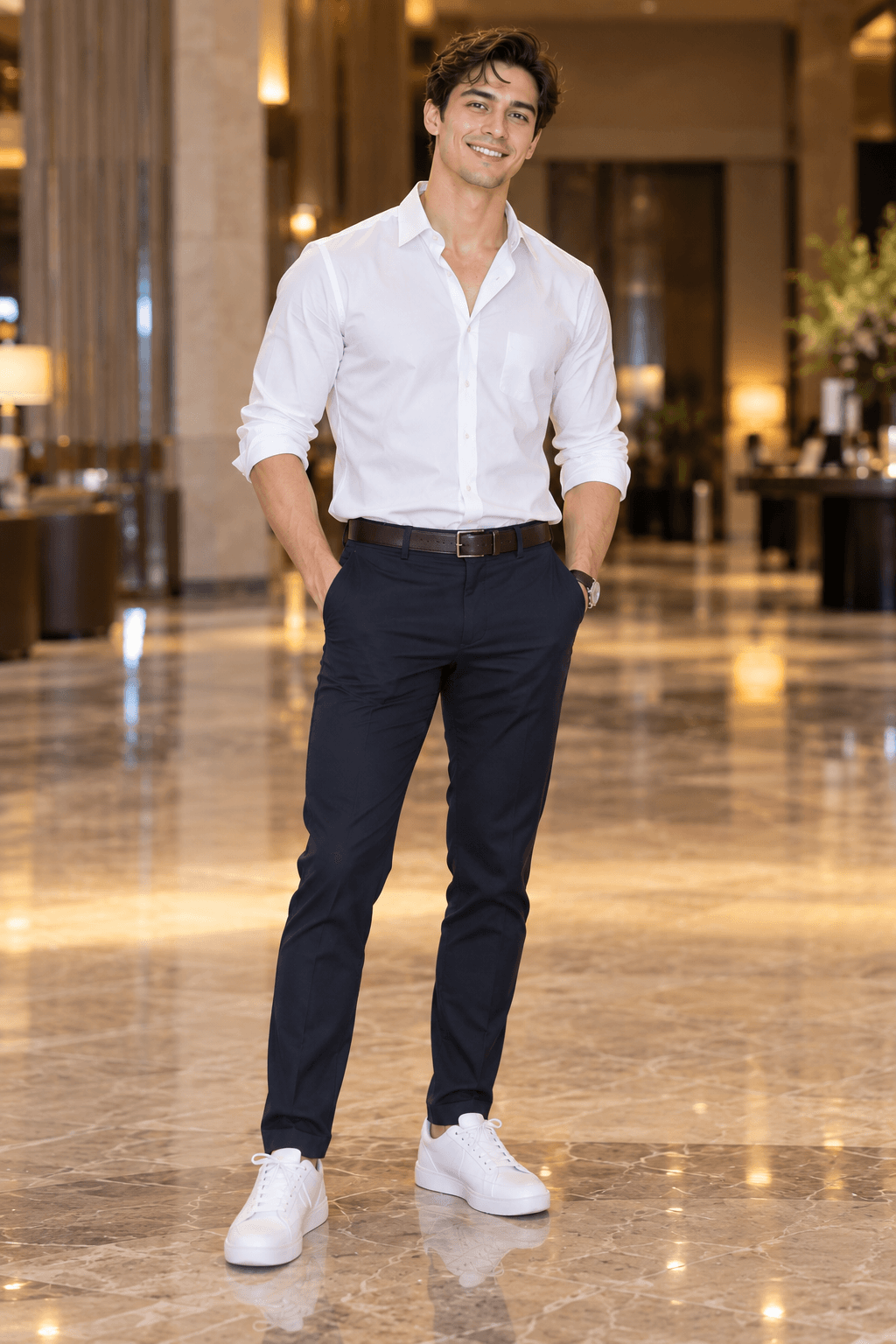
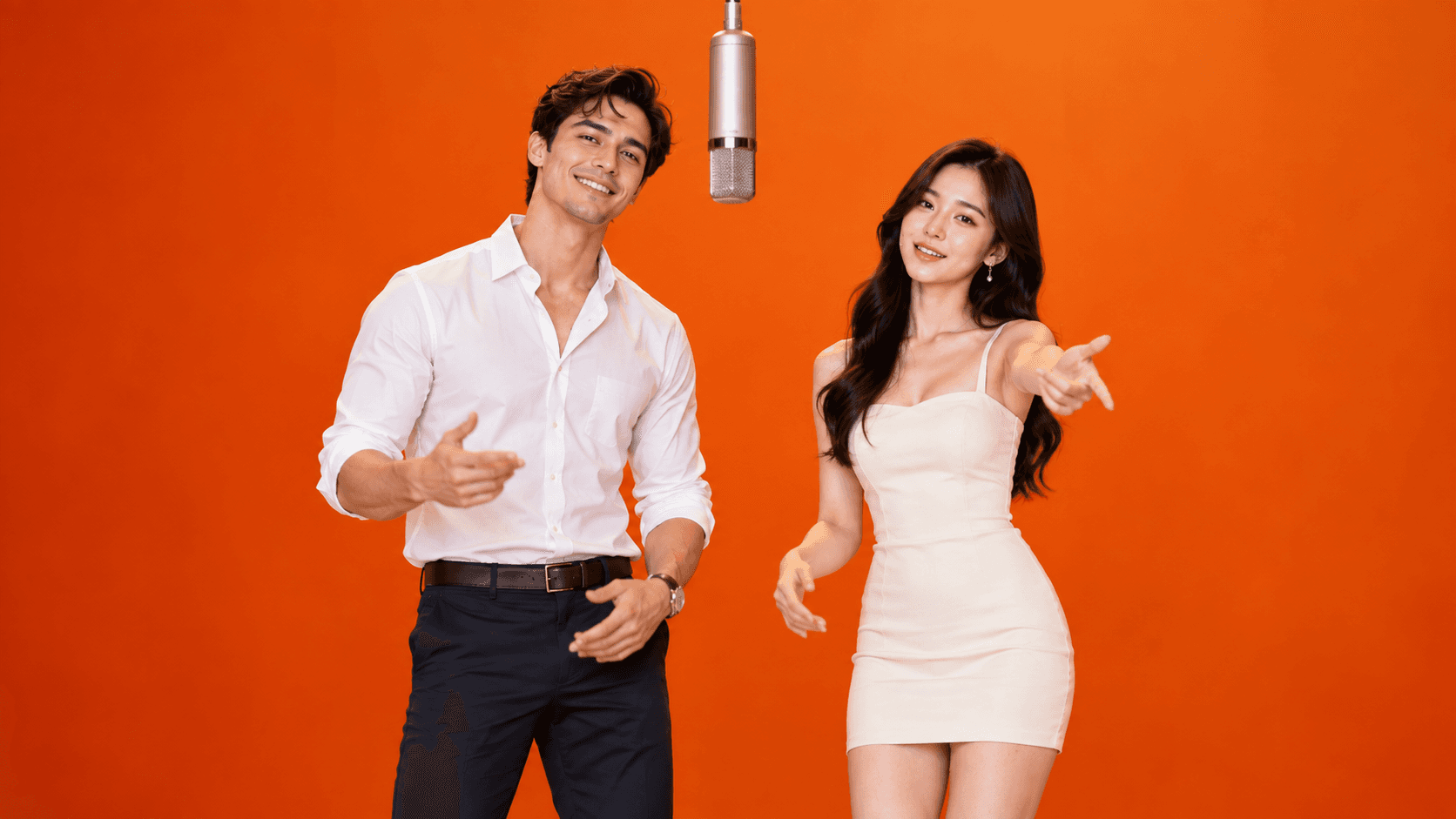
Vidoro assigns the first uploaded portrait to the left performer and the second portrait to the right performer. Those positions stay fixed for the entire 15-second performance. The instruction is repeated throughout the generation pipeline because two people standing close together can otherwise be blended, duplicated or accidentally exchanged.
The fixed motion covers small hand movements, pointing, rhythmic upper-body movement, a turn from the right performer and a short interaction under the suspended microphone. The camera does not pan or zoom. Locking the framing gives the model fewer visual decisions to make and leaves more capacity for identity consistency and movement quality.
The right performer’s turn is the hardest part of the Hotel Lobby character swap. During the back-facing moment, the original face is not visible. The model must infer the rear hairstyle and body view, then restore the correct face when the performer turns forward. A clear portrait helps, but generative video cannot guarantee perfect recovery on every attempt.
This workflow works well for two friends recreating a shared joke, couples making a recognizable duet, or coworkers producing a light team clip. In every case, upload separate portraits rather than a cropped group photograph. Keep facial features visible, avoid extreme angles and use images with even lighting.
Will the two people swap sides?
Person 1 is assigned to the left and Person 2 to the right throughout the fixed performance.
What photos work best?
Use separate, clear, front-facing portraits with visible hair and no heavy face obstruction.